
Important
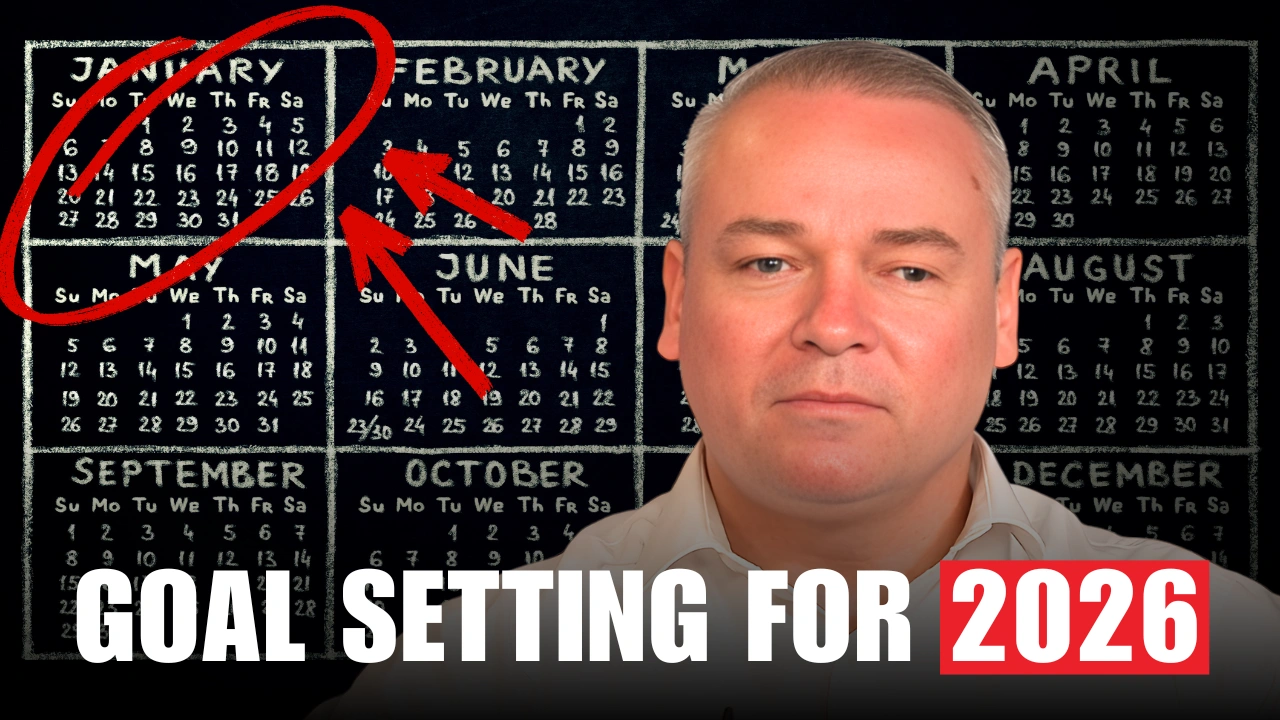
We have rolled into 2026, and it is that time of year where we all say we are going to get organised. The Christmas break gives you enough breathing room to reflect and ask: did you achieve what you wanted to?
We have rolled into 2026, and it is that time of year when we all say we are going to get organised… then life starts up again and the year disappears in a blur.
If you are anything like most people, you get to the end of the year and think:
- “That went quick.”
- “I did some good things.”
- “I also let a few things slide.”
That is why I actually like this time of year. The Christmas break (or at least the quieter patch around it) gives you enough breathing room to reflect on what happened in 2025 and ask a simple question:
Did you achieve the things you wanted to, or did you fall short on a couple of goals?
No guilt. No drama. Just a stocktake.
Start With a List (Shorter Is Usually Better)
If you already made a list over the break, great — pull it out.
If you have not, make one now. It does not need to be the longest list in the world. In fact, a shorter list is often easier to attack.
A good rule of thumb:
- Five goals or fewer are plenty
- If you have ten goals, you probably have two goals and eight wishes
And yes — some goals are “big life goals”, and some are those annoying admin jobs you have been putting off.
Both matter.
Examples of “admin” goals that are worth doing:
- Get your will done (or updated)
- Review insurance
- Clean up your personal and business paperwork
- Put a proper budget and reporting rhythm in place
They are not glamorous, but they remove friction and risk. That is a win.
Treat Each Goal Like Its Own Mini Project
This is the bit people skip.
They write the goal… but they do not do the work to make it achievable.
The way I like to do it is to take each goal as a standalone and set out:
- The specific tasks I need to do
- The things I need to do
- The timeline in which I need to do it
This works for anything:
- fitness goals
- business goals
- career goals
- family goals
- investment and wealth-building goals
If you only take one idea from this whole post, take this:
A goal without steps and timeframes is just a nice thought.
Get Granular (The More Detail, The Better)
You want to get really granular and detailed.
Instead of “Get fit”, try:
- “Walk 4 mornings a week for 30 minutes”
- “Book training sessions Tuesdays and Thursdays”
- “Cut takeaway to once a week”
- “Do a weigh-in and measurement check monthly (not daily)”
Instead of “Grow the business”, try:
- “Review pricing and margins across the top 20 services”
- “Set a weekly pipeline target and track it”
- “Delegate two tasks that currently sit with me”
- “Implement a simple monthly management reporting pack”
Instead of “Build wealth / invest more”, try:
- “Increase the offset balance by $X per month”
- “Automate a monthly investment contribution (even small)”
- “Review debt structure and repayments at the same time each quarter”
- “Set a savings target for a future deposit”
- “Book a check-in with a professional to confirm structure and risks”
You get the idea.
When you break things down into small steps, you stop feeling overwhelmed. You get clarity. You start moving.
The “By When” Matters More Than People Think
The other thing that is really important is time.
Many goals are not things you are going to achieve in three weeks, which means:
- you are not achieving them by the end of January
- you also cannot wait until the 5th of December and have a red-hot crack at them then
Most meaningful goals take consistency.
The point of adding dates is not to make you feel pressured — it is to make the goal real.
A simple approach:
- put tasks into months or quarters
- create a rhythm (weekly, fortnightly, monthly)
- do regular check-ins so you do not drift
Some of Your Goals Are Not 12-Month Goals (And That Is Fine)
Once you map it properly, you will notice something else:
Some goals are not 2026 goals at all. They are two or three-year goals.
That is normal.
So do not throw them out — just park them properly.
What you probably need to do is:
- create a list for 2027 or 2028, and
- focus on what stage of that bigger goal you can achieve in 2026
Example: If your bigger plan is to buy an investment property in 2027, your 2026 “stage” might be:
- clean up cash flow
- build deposit
- reduce personal debt
- improve financial reporting
- tighten your lending position (without doing anything reckless)
That is progress. Real progress.
Keep Goals Achievable (No Pipe Dreams)
There is no point in writing outrageous things that are really just pipe dreams.
I love ambition. I also love realism.
You want goals that:
- stretch you a bit
- still fit the reality of work, family, energy, and time
- do not rely on “everything going perfectly”
Because it will not.
A practical way to sense-check a goal:
- “Could I explain the steps to someone else in 60 seconds?”
- “Have I set time aside for it weekly or monthly?”
- “If life gets messy for a month, can I get back on track?”
If the answer is no, the goal is too vague or too big. Break it down again.
Why I’m Big on Small Steps (The Atomic Idea)
I am a big believer in breaking things down into very small, manageable steps.
When you break everything down, almost anything becomes manageable. That is the whole point.
It is also why my accounting firm is called Atomic — because when you reduce things to the smallest actions, you stop guessing and you start executing.
Big goals are not achieved by motivation. They are achieved by small steps done consistently.
Wrap-Up: Have a Red-Hot Crack at 2026
So here is the simple 2026 plan:
- Write your list (keep it to five or fewer)
- Treat each goal as its own project
- Get granular on the tasks
- Put timelines against those tasks
- Accept that some goals are multi-year (and stage them properly)
- Keep yourself accountable — because the year will move quickly
Have a red-hot crack at 2026 and do not let it go past without you achieving this year.
Disclaimer: This article provides general information only and does not take into account your personal circumstances. It is not financial or tax advice. You should seek independent advice from a qualified professional before making decisions about tax, legal or financial planning matters, along with loan structures or entity structure.