
Important
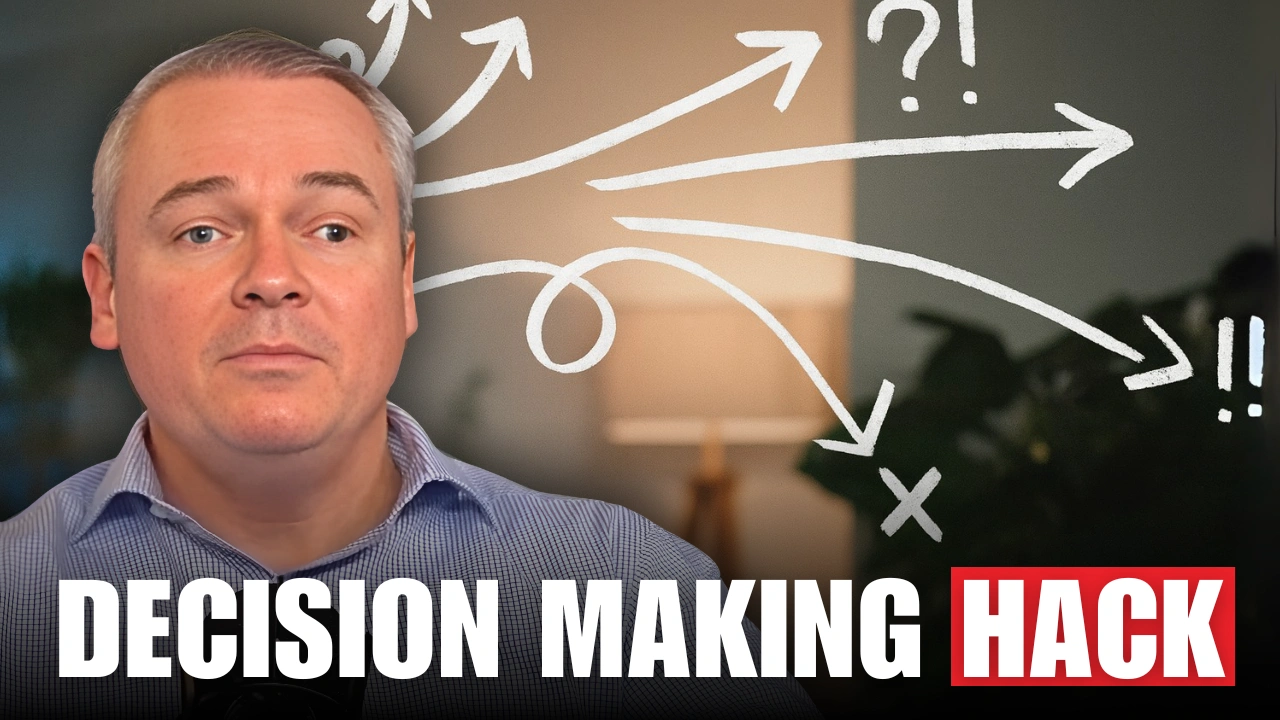
Every major business or investment decision comes down to one question: can you sleep at night? If the answer is no, the numbers do not matter. Risk tolerance is personal — and ignoring it leads to bad outcomes.
There is a moment that tells you more than any spreadsheet ever will.
It is 2:47 a.m. You are awake. You are staring at the ceiling. Your brain is doing a full lap of worst-case scenarios like it is training for a marathon.
That is the Sleep at Night Test.
And if a decision is going to rob you of sleep, it is probably not as “smart” as it looks on paper.
Now, quick housekeeping:
- This is not financial advice.
- I am not a financial adviser.
- This is a simple lens I have used with clients and friends for years to help people make better decisions in business, money, and life.
What Is the Sleep at Night Test?
It is one question:
Will I be able to sleep at night if I do this?
If the answer is “yes”, you are probably in a healthy risk zone.
If the answer is “no”, you need to slow down and think harder. Not because the idea is automatically bad, but because the cost of stress is real, and it usually shows up at the worst time.
This is not about being conservative or scared.
It is about being honest.
Why I Use This Test (Even When the Numbers Look Fine)
Here is what happens in the real world:
Banks largely assess your numbers and serviceability.
Financial planners might focus on asset classes, diversification, and time horizons.
Friends might swear something is a “sure thing” because it worked for them.
All helpful inputs.
But none of them lives in your head at night.
So the test becomes the filter.
Because:
- Just because the bank says you can borrow $1m does not mean you should.
- Just because an investment worked for your mate does not mean it is right for you.
- Just because something is “the best performing option” on a chart does not mean you will hold it when things get uncomfortable.
People do not usually panic-sell because the maths is wrong.
People panic-sell because they are stressed, uncertain, and exhausted.
Where the Sleep at Night Test Applies
This is why I love this method. It is not limited to one area.
You can apply it across:
1. Borrowing and Debt Decisions
Example:
- The bank says you can borrow $1,000,000.
- You borrow the full amount.
- Then every rate rise, every unexpected bill, every slow month at work feels like a punch in the ribs.
Ask:
- Would that level of debt worry you?
- Would you still feel okay if rates moved against you?
- Would you still feel okay if income dropped for a period?
Knowing your borrowing capacity is useful.
But borrowing to your absolute maximum is not always “smart”.
Sometimes it is just “technically possible”.
2. Investing and Asset Choices
You will hear this all the time:
- “This investment is amazing.”
- “Everyone is doing it.”
- “You cannot lose.”
Maybe it is a great investment for them.
But if you do not understand it, and it is going to worry you silly, it might be a terrible investment for you.
A practical approach can be:
- Start small.
- Learn how it behaves.
- “Dip your toes in” before you go all-in.
If you are anxious before you even buy it, you are not setting yourself up for a calm ride.
3. Business Decisions
This is a big one.
The Sleep at Night Test applies strongly to:
- Starting a business in the first place
- Taking on staff (or taking on more staff)
- Renting premises (or upgrading to bigger premises)
- Buying commercial premises
- Doing a commercial fit-out
- Taking on debt to expand
Growth is exciting.
But growth that causes constant stress can destroy the very thing you are trying to build.
A simple business framing:
- If this decision goes slightly wrong, can I carry it?
- If cash flow tightens, do I still sleep?
- If it takes longer than expected, do I still sleep?
4. Personal and Lifestyle Choices
This test works at home too:
- Home renovations
- Car upgrades
- Big lifestyle purchases
- Anything that commits you to ongoing payments
If the decision turns your home life into a pressure cooker, the “upgrade” is not really an upgrade.
The Two-Person Rule: If It Impacts Both of You, It Must Pass for Both of You
This is one of the most important parts.
If you have a partner:
- a spouse at home, or
- a business partner at work,
Then it is not just your Sleep at Night Test.
It is the Sleep at Night Test for the household or the partnership.
Because even if you can handle the risk, your partner cannot:
- It creates tension
- It creates conflict
- It creates ongoing stress
- It becomes a relationship problem, not a money problem
Practical rule:
If one of you is lying awake at night worrying, the decision needs a rethink.
That does not mean “never do anything risky”.
It means you need alignment, communication, and a structure that both people can live with.
A Few Real-World “Test Questions” You Can Use
If you are weighing up a decision, run it through questions like these:
- What is the worst-case scenario here?
- If that happens, what is my plan?
- What would I do if income dropped for six months?
- What would I do if interest rates rose again?
- Do I actually understand what I am buying or committing to?
- Am I doing this because it suits me, or because someone else told me it is “smart”?
- If my partner is involved, are we both genuinely comfortable?
If you cannot answer these calmly, you probably already have your answer.
Wrap-Up: The Practical Takeaway
Next time you are making a big call — money, business, lifestyle, investment — do not just ask:
- “Can I do this?”
- “What do others think?”
- “What does the bank say?”
Also ask:
Will I be able to sleep at night if I do this?
If the honest answer is no, slow down.
Restructure it.
Reduce the risk.
Start smaller.
Or do not do it at all.
Because a decision that looks great on paper but causes sleepless nights has a hidden cost that most people ignore until it is too late.
Disclaimer: This article provides general information only and does not take into account your personal circumstances. It is not financial or tax advice. You should seek independent advice from a qualified professional before making decisions about tax, legal or financial planning matters, along with loan structures or entity structure.