
Important
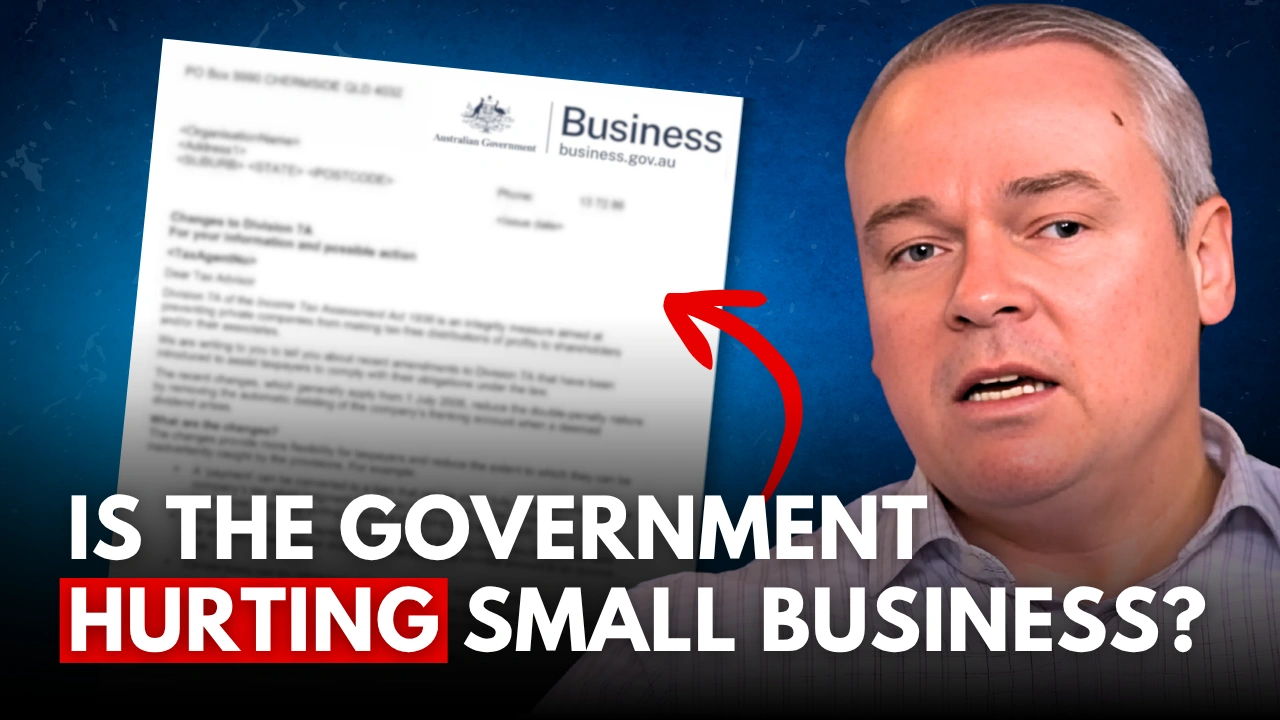
Last week, I filled in another survey from the Small Business Commissioner about regulation and compliance. The question that sums up the whole problem reveals how far removed some departments are from the real world of small business.
Last week, I filled in another survey from the Small Business Commissioner about regulation and compliance.
I have been completing these religiously for three years.
Every time, I include my name, my number, and an open invitation:
“Happy to come in and sit down and discuss how we can reduce red tape and let SMEs get on with it.”
No one has called.
So there I was again, 10 pm at my desk, still working, thinking — here we go again.
And then I hit the question that sums up the whole problem.
The Question That Misses the Point
The survey asked:
- Which departments do you deal with?
- How much time and money do you spend on compliance?
- Are the regulations difficult to meet?
- Have you engaged accountants, lawyers, advisers or industry experts to help you navigate your compliance requirements?
That last one is where I cracked it.
Because that question alone shows how far removed some departments are from the real world of small business.
It assumes that:
- We have a staff member dedicated to each compliance area, or
- We have the spare cash to outsource everything to external consultants.
That is simply not reality.
The Reality of Running an SME
Most small business owners are:
- The managing director
- The HR department
- The finance team
- The marketing team
- The operations manager
- And occasionally the cleaner
All on the same day.
We do not have:
- Unlimited time
- Endless budgets
- A compliance officer for every government department
When a survey asks whether we have hired external experts to deal with red tape, it completely misses the point.
The issue is not whether we can hire more advisers.
The issue is why the system requires so many in the first place.
The Question That Should Have Been Asked
Instead of asking what kind of “support programs” would help — digital tools, guidance papers, education sessions, advisory services — the real question should be:
How do we simplify compliance while maintaining quality outcomes?
That is the conversation we should be having.
Because right now, it often feels like:
- More surveys
- More consultants
- More reports
- More portals
- More “educational material”
So that all departments can tick a box and say they are engaging with SMEs.
Meanwhile, small business owners are still filling out forms at 10 p.m.
The Hidden Cost of Compliance
There is a real cost here.
Not just financial.
Yes, compliance costs money. But it also costs:
- Mental energy
- Family time
- Strategic thinking time
- Growth momentum
When you are constantly reacting to regulatory obligations, you are not:
- Innovating
- Hiring
- Expanding
- Investing in your team
As someone who runs a family-owned accounting and advisory firm that started in 1962, I see this every day.
We deal largely with SMEs.
And we are one ourselves.
We see the toll compliance takes — especially on businesses in that $1m–$10m turnover range where they are big enough to be heavily regulated, but not big enough to have deep internal resources.
Support vs Simplification
Let me be clear.
I am not arguing against quality standards.
I am not arguing against accountability.
What I am arguing for is simplification.
There is a big difference between:
- Maintaining strong standards and
- Creating layers of administrative complexity
You can protect consumers, employees and the system without designing compliance frameworks that assume every SME has a compliance department.
If that assumption is built into policy design, the outcome will always be flawed.
Am I Wasting My Time?
Sometimes it feels like that scene in The Shawshank Redemption.
Red sitting in front of the parole board saying:
“You go on and stamp your form, sonny, and stop wasting my time.”
That is how it can feel filling in these surveys.
But here is the thing.
I cannot stop.
Small businesses are the backbone of Australia.
They take the risks.
They employ millions.
They put their homes on the line.
They build something meaningful for their families and communities.
If those of us who understand the system do not keep pushing for reform, nothing changes.
So I will keep completing the surveys.
I will keep offering to sit down and talk.
And I will keep advocating for practical, workable reform.
What Real Change Could Look Like
If we are serious about reform, we should be asking:
- Can reporting be consolidated across departments?
- Can duplicative requirements be removed?
- Can obligations be scaled properly to business size?
- Can forms and portals be simplified?
- Can departments coordinate rather than operate in silos?
These are practical questions.
They do not require more consultants.
They require better design thinking.
Practical Takeaway for SME Owners
While we wait for reform, here is the practical reality:
- Build systems early.
- Keep your record-keeping tight.
- Centralise your compliance processes.
- Do not ignore obligations — they do not go away.
- And speak up when the system does not make sense.
Even if it feels like you are shouting into the void.
Because collective pressure does eventually move policy.
Disclaimer: This article provides general information only and does not take into account your personal circumstances. It is not financial or tax advice. You should seek independent advice from a qualified professional before making decisions about tax, legal or financial planning matters, along with loan structures or entity structure.