
Important
Once you understand the ATO’s overall strategy, the last 12 months of behaviour starts to make a lot more sense. If you have felt like they are moving faster and escalating harder — you are not imagining it.
This week I want to step back and talk about the ATO’s overall strategy at the moment — because once you understand the strategy, the last 12 months of “ATO behaviour” start to make a lot more sense.
If you have felt like the ATO is moving faster, being less flexible, and escalating harder than you remember… you are not imagining it.
The Backdrop (The Part No One Can Ignore)
The key thing to keep in mind is that the ATO is sitting on a very large debt book.
Latest published ATO “collectable debt” figures (current to 30 June 2025):
| ATO collectable debt | $54.2 billion (as at 30 June 2025) |
| Small business share | $35.9 billion (around 66.1% of collectable debt) |
| Unpaid activity statement debt | $34.7 billion (as at 30 June 2025) |
That is a huge number, and it explains a lot. If you are the ATO and you have that level of outstanding debt, you do not “gently remind” forever. At some point you change the system.
What the ATO Is Trying to Achieve
There are two main tracks running at the same time:
1. Move the System Toward Real-Time
The ATO is moving toward:
- Real-time reporting
- A big shift toward real-time payment (or at least closer-to-real-time payment)
This will roll out progressively over the coming years, but the direction is clear.
From the ATO’s perspective, real-time reporting/payment does a few things:
- Improves ATO cash flow
- Improves the Federal Government’s cash flow
- Tightens compliance because issues show up quickly, not 6–18 months later
From a business perspective, over time, it can actually help:
- It reduces the false sense of security when you have cash sitting in the bank that is not really yours
- It “smooths” the cycle, because you are dealing with obligations sooner, rather than letting them stack up
But here is the hard part. If a business already has tax liabilities sitting there, moving toward real-time payment creates immediate cash flow pressure until you get through to the other side.
That is where a lot of pain sits right now.
2. The Enforcement Shift: The ATO Is Chasing Harder Than It Has in Years
The second track is collections.
The ATO is undertaking a far more forceful recovery action process than it has for the last five years.
Honestly, it feels more like seven to ten years since we have seen them chase this hard.
The practical changes people are noticing:
- Faster escalation
- Less willingness to remit penalties
- Less willingness to remit GIC (general interest charge)
- More “sharp” consequences if you stay disengaged
This is not about the ATO suddenly becoming “mean”. It is about them finally deciding they cannot keep letting collections slide, because the problem becomes too large to fix in a hurry.
GIC Has Become More Painful (And This Matters)
Here is a big change that is easy to miss if you are not living in this space every day:
- Interest charged by the ATO (GIC and SIC) is no longer tax-deductible for amounts incurred on or after 1 July 2025.
In plain English:
- Carrying tax debt costs more than it used to
- The “I will just wear the interest for a while” approach is now a worse strategy
- It is another lever pushing people to pay sooner, not later
DPNs: Directors, This Is the Danger Zone
Directors of companies need to treat this part seriously.
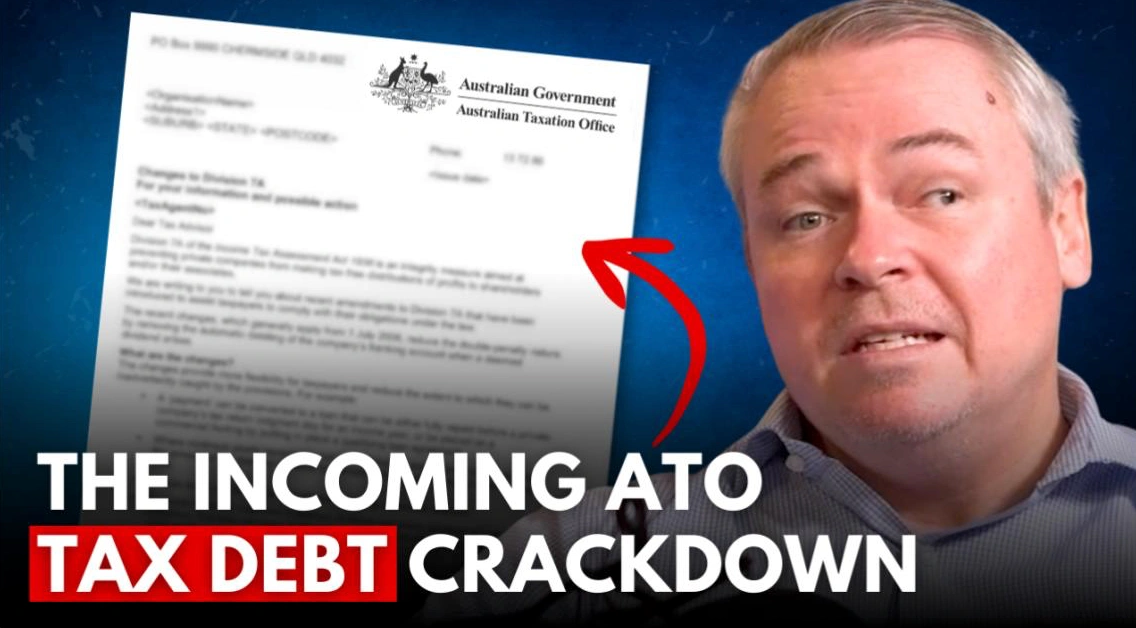
- Director Penalty Notices (DPNs) are being issued
- If you receive one of these, you get onto your accountant quick smart
- You need to take immediate action
I will say it plainly: this is not the sort of letter you leave unopened on the passenger seat of the ute for two weeks.
The “Creative” Collection Method: The ATO Using Other Parties
This is where things have become… interesting.
The ATO is not just chasing directly. They are using other parties to apply pressure.
I saw this working in real life:
A client had a tax liability. Unfortunately, they had not set up a payment arrangement. The ATO moved through the standard collection process very quickly.
Then they advised the credit agencies of the outstanding debt.
This particular client was a builder.
Within a day or two, the client had notification from the homeowners’ warranty insurance: If the tax debt was not paid, or not in a compliant payment arrangement within 14 days, the insurance would be cancelled.
Now think about what that means:
- The builder cannot operate without appropriate insurance.
- The ATO gets the outcome they want without having to chase further.
- It is pressure by proxy, and it is effective.
And a second knock-on effect: If a loan application is in progress, a credit event like that can become a serious problem at the worst possible time.
The Real-World Cash Flow Issue (Especially in Construction)
One of the most sensible comments I have seen on this topic came from someone in the construction industry:
Payment terms can often be 30–60 days on the regular. But suppliers and other creditors are often COD or 30 days.
That creates a cash flow gap that SMEs end up funding.
That is the reality:
- Debtors are slow.
- Creditors want payment.
- Tax obligations land on top of that.
- And if reporting/payment moves closer to real time, the timing mismatch gets harder, not easier.
Cash Flow Management
Yes, some businesses have lines of credit — but:
- Not everyone can get them
- Even when you have them, you still need tight cash flow management
- A facility is not a solution on its own; it is just a tool (and it can turn into a trap if you do not run the business well)
So What Should You Actually Do (Practical Steps)
If you are behind:
- Do not hide
- Engage early
- Get a payment arrangement in place properly (one you can actually stick to)
If you are a director:
- Make sure lodgements are up to date
- Make sure your addresses are current with the ATO and ASIC
- Keep an eye on electronic mail from your accountant
- Also, keep an eye on your myGov account
- Treat any ATO escalation as urgent
If cash flow is tight:
You need a plan that works in the real world, not a fantasy plan that collapses in 30 days.
Get very honest about:
- Margins
- Payment terms
- Unprofitable work
- The gap between what customers owe you and what you owe others
Closing (The “Tell It Like It Is” Bit)
The ATO is moving to a tighter, faster, more real-time system.
At the same time, they are cleaning up the back book of debt with a much tougher approach.
If you have tax debt sitting there, do not assume you have time.
You might find out very quickly that you do not.
Disclaimer: This article provides general information only and does not take into account your personal circumstances. It is not financial or tax advice. You should seek independent advice from a qualified professional before making decisions about tax, legal or financial planning matters, along with loan structures or entity structure.