
Some old ideas deserve to stay in the past. Others probably deserve a second look.
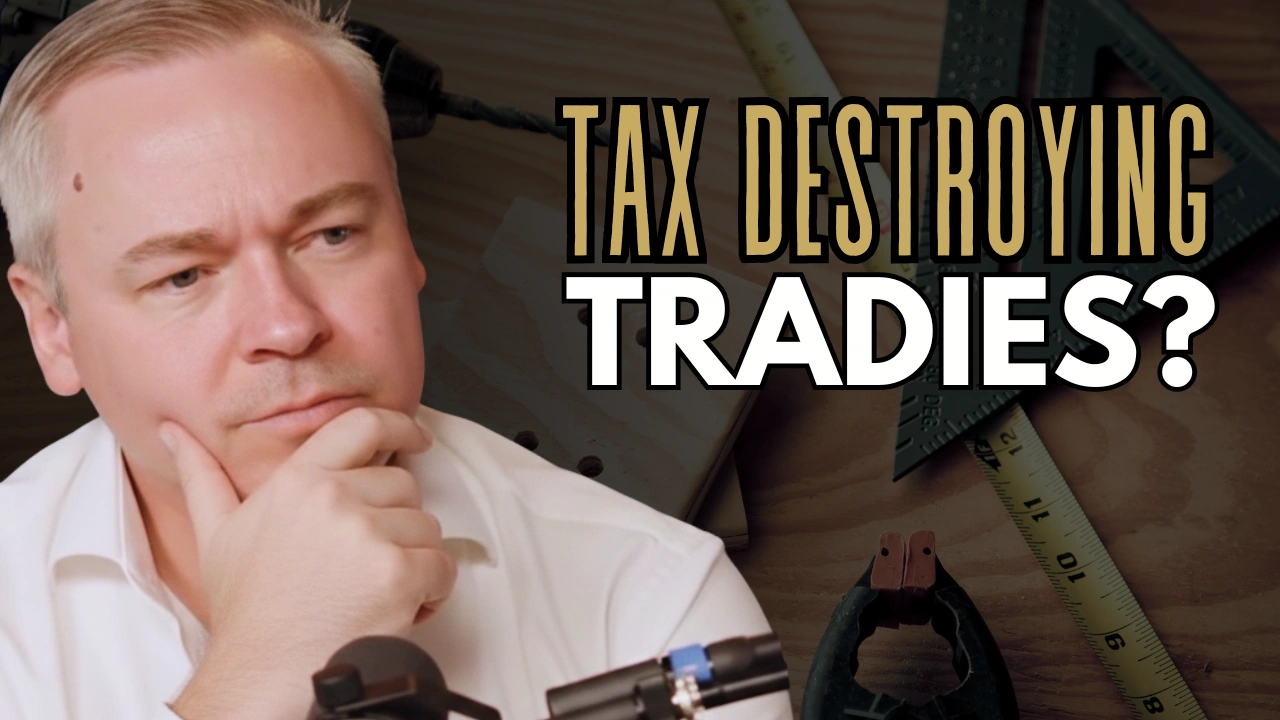
The old Prescribed Payment System, better known as PPS tax, may fall into the second category.
Now, before anyone gets too excited, I am not suggesting we drag the tax system back into the 1980s. No one needs more paper forms, carbon copies or old-school administration for the sake of it. But the principle behind PPS was not silly.
In fact, for a lot of subcontractors, it made very good practical sense.
Tax was withheld from certain payments when the money was paid. That meant subcontractors did not receive 100% of the gross amount, spend 100% of the gross amount, and then find themselves short when the ATO came knocking later.
After watching this issue play out for more than 20 years, I think it is time to ask a fair question:
Should we bring back a modern, digital and targeted version of PPS?
What was the old PPS system?
Back when I kicked off as an undergraduate accountant, the Prescribed Payment System applied to many subcontractor arrangements.
It was commonly seen in industries such as:
- trades
- construction
- cartage
- haulage
- cleaning
- other industries using subcontract labour
The broad idea was simple. A payer would withhold tax from payments made to certain subcontractors. The standard rate, from memory and experience, was 20% unless a variation applied.
It was not perfect. No tax system ever is. But it did one thing very well.
It helped stop people from treating the full gross payment as money available to spend.
That matters more than people think.
Then GST and PAYG came along
When GST came in, the old PPS system was folded into the broader PAYG system.
The theory made sense. Business owners would manage their tax through BAS lodgements, GST reporting, PAYG instalments, income tax planning and proper cash flow management.
For well-organised business owners, that system can work. If you have good records, good habits, proper software, strong discipline and an accountant watching the numbers, you can generally manage quarterly tax liabilities.
But here is the uncomfortable truth.
A lot of these people were not really business owners in the way we like to imagine. They were subcontractors. Nothing more, nothing less.
That is not an insult.
Many are excellent tradespeople, drivers, operators and workers. But being good on the tools is not the same thing as being good at tax cash flow, GST, PAYG instalments, insurance, super, vehicle finance, household budgeting and business administration.
Those are completely different skill sets.
And we have spent more than two decades pretending otherwise.
The real problem is behaviour
The problem is not only the tax system. The problem is behaviour.
If someone receives the gross amount, they often start treating the gross amount as their money. But it is not all their money. Some of it belongs to the ATO.
That is the bit people do not always want to hear.
The difficulty is that once the money lands in the bank account, life gets in the way. The rent or mortgage needs to be paid. The ute needs fuel. The kids need things. The tools need replacing. The credit card is sitting there. The weekend arrives.
Then, three months later, the BAS turns up.
Then the income tax bill turns up.
Then the PAYG instalments start.
Suddenly, the subcontractor is not just behind. They are chasing their tax tail.
I have seen this happen for 10, 15, even 20 years. Good people. Hard workers. But constantly behind with lodgements, payments and ATO debt.
That is not a good system.
Why withholding works
Withholding works because it removes the temptation early.
That is not a moral judgement. It is just practical cash flow discipline.
Most wage and salary earners never see their gross pay in full. Tax is withheld before the net amount hits their bank account. As a result, most employees do not need to find a large lump sum at the end of the year to pay their basic income tax.
For many subcontractors, the opposite happens. They get paid gross, spend gross, and then the tax system expects them to magically have money sitting aside months later.
In a perfect world, yes, they should have put it aside.
But in the real world, many do not.
So the question becomes:
Do we keep designing the system around how people should behave, or do we design it around how people actually behave?
That is the practical issue.
A modern PPS system does not need to be clunky
This is not about returning to paper forms and manual ledgers.
We live in a different world now. We have cloud accounting software, bank feeds, digital invoicing, Single Touch Payroll, online ATO reporting and contractor reporting through the Taxable Payments Annual Report system.
So why could we not have a modern withholding system for certain subcontractor payments?
The basic process could be simple:
- the lead contractor pays the subcontractor
- a set percentage is withheld
- the withheld amount is reported and paid to the ATO
- the subcontractor receives the net amount
- at year-end, the subcontractor has a credit against their final tax position
That would not solve every problem. But it would help prevent many subcontractors from building up tax debts that become harder and harder to manage.
Reporting after the event is not the same as prevention
We already have contractor reporting in certain industries.
That gives the ATO visibility over payments made to contractors, which is useful. But reporting after the event is not the same as withholding when the money is paid.
There is a very big difference between telling the ATO what happened and preventing the tax debt from building up in the first place.
The current system can show the ATO that a subcontractor was paid. But it does not necessarily mean the subcontractor still has the cash to pay the tax.
That is the gap.
And it is a fairly obvious one.
What about the lead contractor?
One argument against this sort of system is that it creates more administration for lead contractors.
That is a fair concern. No one running a business wants another layer of red tape.
But let us be practical. Lead contractors are already used to paying the full amount to the subcontractor. The cash flow impact should not be enormous if the total amount being paid is the same.
The difference is simply where the money goes.
Instead of 100% going to the subcontractor, part goes to the subcontractor and part goes directly to the ATO.
Yes, there would be administration. There always is. But with modern software, this should be manageable.
And it may be far less painful than the current system, where subcontractors fall behind, the ATO spends years chasing debts, accountants are left trying to clean up the mess, and families live under constant tax stress.
That is not efficient either.
This is not about punishing subcontractors
A modern PPS-style system should not be framed as punishment. It should be framed as protection.
Many subcontractors are not trying to avoid tax. They are not dishonest. They are not lazy. They are often simply poor tax administrators.
That is very different.
They are busy doing the work. They are quoting jobs, dealing with builders, managing weather delays, staff issues, materials, equipment, vehicles and customer expectations.
Then, on top of that, we expect them to manage their tax like a finance department.
Some can. Many cannot.
Maybe the system should acknowledge that.
Contractors are not employees
Some people will argue that this would treat subcontractors like employees.
I do not agree.
A subcontractor can still be a subcontractor. They can still run their own business, claim legitimate deductions, quote their own work, manage their own clients, operate under their own ABN and take commercial risk where that genuinely exists.
Withholding tax from a payment does not automatically make someone an employee.
It simply means tax is collected earlier.
That is the key distinction.
We should not confuse tax collection mechanics with employment status.
A targeted system would be important
I am not saying every contractor in every industry should be dragged into this. That would be overkill.
A modern PPS system should be targeted to industries where there is a long history of:
- subcontract labour
- cash flow problems
- unpaid tax debt
- late lodgements
- poor record keeping
- repeated BAS and PAYG issues
That is why industries such as construction, trades, cartage, haulage and cleaning come to mind.
Not because people in those industries are bad people. They are not.
But because the operating model often creates the problem. Money comes in unevenly. Costs are constant. Margins can be thin. Administration is often weak. Tax is too easy to leave until later.
The ATO keeps chasing the problem after it happens
This is the part that frustrates me.
The ATO is already focused on small business tax debt. That is understandable. The tax has to be collected.
But if the same problems keep happening, year after year, decade after decade, maybe we need to look further upstream.
Do we want a system that keeps chasing the problem after it happens?
Or do we want a system that helps prevent the problem before it gets out of control?
To me, prevention makes more sense.
It is better for the ATO. It is better for subcontractors. It is better for accountants. It is better for families. And it is better for the broader small business system.
The practical takeaway
A modern PPS-style system would not be perfect.
There would be design issues. There would be industry pushback. There would be questions around rates, variations, software, exemptions and administration.
The devil is always in the detail.
But the principle is worth discussing.
Collect tax when the money is paid.
Do not wait until the money is gone.
Because for many subcontractors, the issue is not whether they should pay tax. Of course they should.
The issue is whether the current system gives them a realistic chance of staying on top of it.
Based on what I have seen over more than two decades, I am not convinced it does.
Sometimes the old way was not perfect. But the principle was right.
Maybe it is time to bring it back — properly modernised, properly targeted, and built for the way people actually behave.
Not the way we wish they behaved.
What do you think?
Would a modern PPS-style withholding system help subcontractors stay out of tax debt, or would it just create another layer of red tape?
Disclaimer: This article provides general information only and does not take into account your personal circumstances. It is not financial or tax advice. You should seek independent advice from a qualified professional before making decisions about tax, legal or financial planning matters, along with loan structures or entity structure.